
- / Title
CRISPR Epigenomic Editing and Single-Cell Transcriptomics in Oncogenesis DissertationTitles | phdassistance.com
Info: Causal Inference and Topological Analysis for Temporal Pattern Recognition DissertationTitles | phdassistance.com
Published: 24th June 2026 in CRISPR Epigenomic Editing and Single-Cell Transcriptomics in Oncogenesis DissertationTitles | phdassistance.com
Share this:
Related Services
Introduction
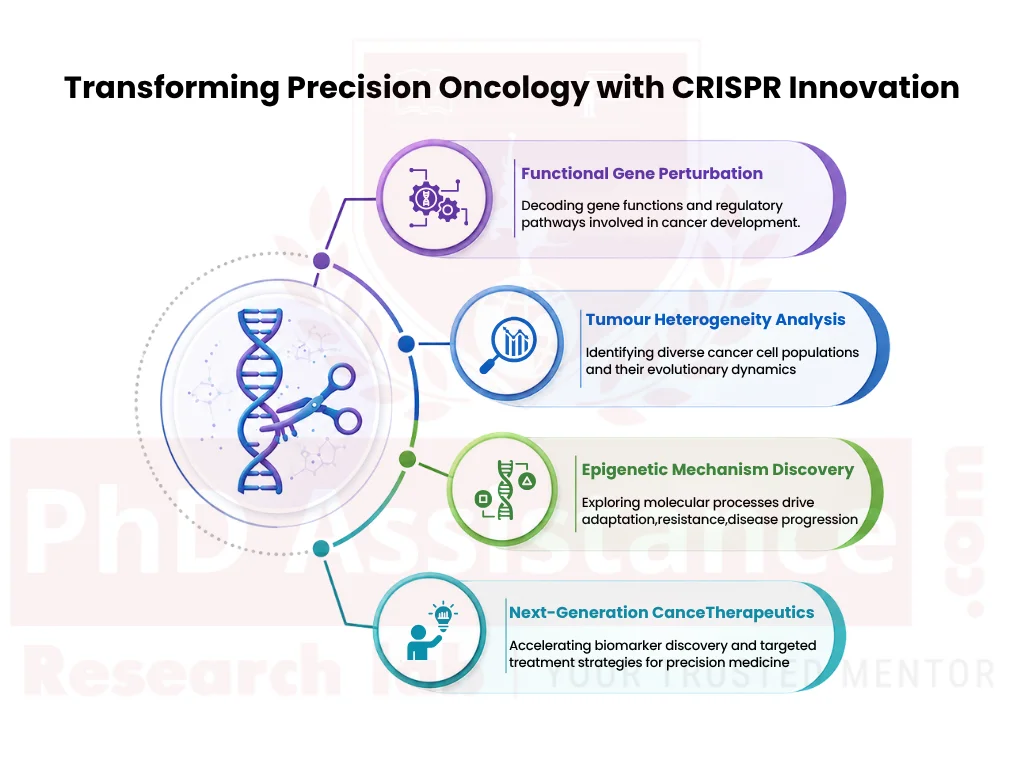
Due to the speedy development of AI, ML and data mining techniques, temporal data analysis has been significantly changed in healthcare, cybersecurity, intelligent system domains, etc. In recent times, causality inference research has progressed well towards going beyond discovering correlations to discover causal influences and infer predictions. Moreover, data augmentation and computer power growth have enabled quick advances in topological analysis for temporal pattern recognition, such as finding previously unknown temporal structure and dependence in high-dimensional data. Advances in CRISPR technology in Cancer research allowed to study complex diseases and progressions with enhanced capability. A causality-topology learning-based approach could lead us to find more profound temporal patterns. Nevertheless, issues such as scalability, interpretability, privacy and reliability for causal discoveries still challenge actual applications. As a result, a recent study attempts to design a valid and secure interpretable causal-topological temporal pattern recognition system.
Proposed PhD Title 1: CRISPR Gene Editing–Driven Epigenetic Regulation of Therapy-Induced Tumour Heterogeneity Through Single-Cell RNA Sequencing in Oncogenesis
Recent efforts to address challenges posed by cancer heterogeneity, treatment resistance and disease relapse have underscored the significant role of Epigenetic control during the pathogenesis and clinical outcome of the disease. Alterations to the cell genome can serve as drivers for cancer, but epigenetics contribute significantly to Tumour Heterogeneity and the adaptive capabilities of cancer cells. Modern genome editing methods like CRISPR gene editing allow precise alteration of Epigenetic control, while RNA Sequencing enables cancer cell assessment on the single-cell level. Kim et al. Have now characterised epigenetic mechanisms by showing how the induction of epigenetic plasticity leads to numerous adaptive states in resistant cancer cells that facilitate treatment resistance. Nevertheless, functional mechanisms of epigenetic remodelling-induced differences between individual cancer cells have been scarcely elucidated
Problem Statement:
Previous cancer studies typically focus on transcriptional changes, chromatin accessibility alterations or epigenetic modifications independently. This disconnected framework makes it impossible to delineate gene regulatory causality that drives tumorigenesis, progression and tumour heterogeneity.
Research Gap:
Although recent advances in RNA Sequencing (scRNA-Seq) technology and in vitro functional assays using Gene-Editing enhance functional genomics studies, there remains a lack of combined usage of these techniques for building a global gene regulatory network.
Research Question:
Can CRISP-Gene Editing of epigenetic regulators and sRNA-seq identify mechanisms driving Tumour Heterogeneity and treatment resistance?
Outcome:
In this study, we propose a conceptual model connecting the effect of Epigenetic control with the different States of cancer cell populations that can be used to identify novel targets and therapeutic biomarkers to counter heterogeneity-mediated therapeutic resistance.
Reference:
Kim, H. J., Lee, H., Hong, J., & Park, D. (2026). Epigenetic heterogeneity and plasticity in therapy-induced tumour states through single-cell multi-omics.
Proposed PhD Title 2. Multiomic CRISPR Gene Editing and Single-Cell RNA Sequencing Framework for Mapping Gene Regulatory Networks in Oncogenesis
Analysis of the gene regulatory networks driving cellular transformation and tumourigenesis is needed to elucidate oncogenesis. Recent development of CRISPR Editing technologies facilitates accurate perturbation of oncogenic regulators, while single-cell RNA Sequencing allows fine-detailed analysis of cell responses and transcriptomic dynamics. The application of multiomic techniques involving transcriptional and chromatin accessibility has advanced Cancer Cell Analysis and deciphering of regulatory networks. Menon et al. (2025) have shown the feasibility to apply and integrate of CRISPR tools into single-cell methods to provide novel information about gene regulatory networks, the causalities of epigenetic alterations and their subsequent transcriptional consequences; in cancer progression is less well defined.
Problem Statement:
Single-cell technologies can clearly delineate the heterogeneous cancer cell population in tumours and the various cellular states. These findings are usually descriptive, without adequate molecular functional proof to support the pathways involved in plasticity, lineage switching, and the progression of the disease.
Research Gap:
Although RNA sequencing technology has led to considerable improvements in describing populations in the context of tumour heterogeneity, only limited research to date has applied the application of Gene Editing technology as a functional tool to probe the genes and regulatory pathways responsible for the cellular states.
Research question:
Could a multi-omic CRISPR Editing system enhance the discovery of gene regulatory networks controlling Oncogenesis and Tumour Heterogeneity?
Result:
The project will produce a regulatory atlas that will tie gene perturbations to Epigenetic control and transcriptional response for research to aid in precision oncology.
Reference:
Menon, A. V., Song, B., Chao, L., et al. (2025). Unravelling the future of genomics: CRISPR, single-cell omics, and the applications in cancer and immunology.
Proposed PhD Title 3. CRISPR Gene Editing–Based Single-Cell RNA Sequencing Platform for Deciphering Tumour Heterogeneity and Cellular Plasticity in Cancer Evolution
Tumour heterogeneity has been a major obstacle to the clinical management of cancer for many years. Each of the multiple cell types in a cancer has its own properties, from appearance to growth rate to therapy sensitivity. However, progress is being made at the cellular level to address tumour evolution. The advancement in RNA Sequencing (scRNA-Seq) enables researchers to detect elusive cellular states and study tumour evolution with unparalleled detail, while CRISPR Editing offers unique capabilities for elucidating the contribution of individual genes to cell plasticity, lineage plasticity and cancer progression. As it turns out, epigenetic modifications may play an important role in the adaptation of cancer cells to changing conditions and their diversification, although the epigenetic regulators enabling such state stability and evolution are largely undefined at present.
Problem Statement:
Most of the research applying CRISPR to oncology has focused on gene editing and target identification, with not enough effort on what the effects of epigenetic changes on the intercellular interactions between the tumour and the immune system. Many approaches are not interpretable for scientists and clinics who wish to interpret how and why a tumour grows, bypasses the immune response, or responds to therapy.
Research Gap:
This project is predicted to build a detailed atlas for regulatory networks correlating genetic perturbations, epigenetic factors, and transcriptomic response and may identify therapeutic targets or expand upon the precision oncology investigation.
Research Question:
Can CRISPR-mediated Perturbation and RNA Sequencing Reveal Causal Regulators of Cellular Plasticity and Tumour Progression?
Outcome:
We propose that the findings from this study will allow a mechanistic understanding of cancer cell adaptation, uncover novel biomarkers related to heterogeneous cancer progression, and lead to new therapeutic targets and strategies.
Reference:
Menon, A. V., Song, B., Chao, L., et al. (2025). Unraveling the future of genomics: CRISPR, single-cell omics, and the applications in cancer and immunology.
Proposed PhD Title 4. Explainable CRISPR Gene Editing Frameworks for Epigenetic Regulation and Tumour Microenvironment Remodelling in Precision Oncology
Cancer progresses, disseminates and escapes the immune system because of complex interplay between cancer cells and the tumour microenvironment (TME) comprising immune, stromal and vascular systems. The interaction between cancer cells and TME affects tumour biology and clinical outcomes. With recent successful implementation in altering the genome in cancer cells by using CRISPR Editing technologies, not just editing target DNA has the potential, but targeted Epigenetic control and tumour microenvironment engineering also opened up possibilities for further exploring the relationship between molecular modification and cellular cross-communication and adaptability. Advances in explainable Artificial Intelligence are providing further possibilities in interpreting tumour ecosystems. As Li et al. (2026) have pointed out, bringing these CRISPR technologies into precision oncology needs to be prioritised. However, the direct connection between epigenetic alterations and the remodelling of TME is not thoroughly elucidated.
Problem Statement:
CRISPR Editing has shown tremendous prospects in cancer research and Epigenetic research. However, there has been very little investigation about the integration of explainable analytical models into the study of the cancer microenvironment. The causal link between the epigenomic remodelling and cellular signalling networks and cancer biological behaviours has not been widely studied within a comprehensive precision oncology framework.
Research Gap:
Few studies that combine CRISPR editing, epigenetic regulation, and explainable analytical models are in operation in oncogenesis studies to reconstruct tumour microenvironment remodelling.
Research Question:
Could explainable gene editing models unveil the role of Epigenetics in reshaping cancer development?
Outcome:
In this investigation, a robust framework that can enable precise and understandable prediction of targets amenable to therapy and offer knowledge on the dynamics of tumour evolution and reaction to treatment will be created.
Reference:
Li, K., Huang, P., Qian, Y., et al. (2026). CRISPR Enabled Precision Oncology: From Gene Editing to Tumor Microenvironment Remodeling.
Proposed PhD Title 5. Single-Cell Pharmacogenomic Investigation of Epigenetic Drug Resistance Using CRISPR Gene Editing and Single-Cell RNA Sequencing
Therapeutic resistance is a predominant cause for treatment failure and mortality from cancer around the world. Recent advances in targeted drugs and personalised therapy provide a huge leap to improve outcomes; however, the phenomenon of resistance often develops from within the tumour during treatment. Increasingly, evidence highlights the critical impact of dynamic interactions among genetic aberrations, epigenetic maintenance, and therapeutic selection pressure on the development of resistance. Recent advances in RNA sequencing have enabled in-depth characterisation of resistant cell subclones and transcriptional adaptations associated with treatment outcome at single-cell resolution. At the same time, CRISPR editing technologies offer a high-throughput approach for the functional study of cancer-related genes participating in therapeutic outcome. Xu et al. (2025) have exemplified the utility of pharmacogenomic screens to study the molecular phenotypes of epigenetic-mediated resistance. The precise biological relationship between gene alterations, drug exposure, and resistant cellular states, however, remains poorly defined.
Problem Statement:
Pharmacogenomic studies of current drugs demonstrate the ability to successfully discover resistance-related cell populations, and even resistance-associated molecular profiles, in the context of treatment; however, they do not systematically examine the causes of how genetic modifications, changes in methylation and drug resistance can also develop over time and survive with drug treatment, the resistant cancer cells to grow.
Research Gap:
Both CRISPR Editing and RNA sequencing technologies are separately well-developed and extensively applied for cancer research. Nevertheless, a handful of reports utilise these two powerful techniques synergistically to characterise epigenetic drug resistance at the single-cell level. Besides, the detailed molecular mechanisms that associate treatment with Epigenetic control and Tumor Heterogeneity are poorly understood.
Research Question:
Can CRISPR editing paired with single-cell sequencing elucidate pharmacogenomic drivers of epigenetic drug resistance and Tumour Heterogeneity?
Outcome:
This study will create an atlas that represents all the cellular states of resistance-associated genes and uncover therapy targets to improve therapy and implement precision medicine methods.
Reference:
Xu, C., Ma, H., Sheng, T., et al. (2025). Single-cell Pharmacogenomic Landscapes of Epigenetic Drug Resistance Revealed by Gastric Cancer Perturb-seq.
Need assistance finalising your dissertation topic? Selecting a strong, researchable topic can be challenging — but you don’t have to do it alone.
Our research consultants can help refine your ideas, identify literature gaps, and guide you toward a topic that aligns with current academic trends and your programme requirements.
Contact us to begin one-on-one topic development and refinement with PhdAssistance.com Research Lab.
Share this:
Cite this work
PhDAssistance. (n.d.). Virtual Influencers Dissertation Titles Retrieved 30th January 2026, from https://phdassistance.com/title/virtual-influencers/
“Virtual Influencers Dissertation Titles, https://phdassistance.com/title/virtual-influencers/
“Virtual Influencers Dissertation Titles” PhDAssistance, PhDAssistance, Tuesday, January 30th,2026.
PhDAssistance, n.d. Virtual Influencers Dissertation Titles[Online]. Available at: https://phdassistance.com/title/virtual-influencers/ [Accessed January 30th, 2026].
PhDAssistance. Virtual Influencers Dissertation Titles[Internet]. PhDAssistance; [cited 2026 January 30th]. Available from: https://phdassistance.com/title/virtual-influencers/
PhDAssistance (n.d.).
Virtual Influencers Dissertation Titles. Retrieved January 30th, 2026, from https://phdassistance.com/title/virtual-influencers/
PhDAssistance, Virtual Influencers Dissertation Titles(PhDAssistance, n.d. January 30th accessed 2026.
Study Resources
Free resources to assist you with your university studies!